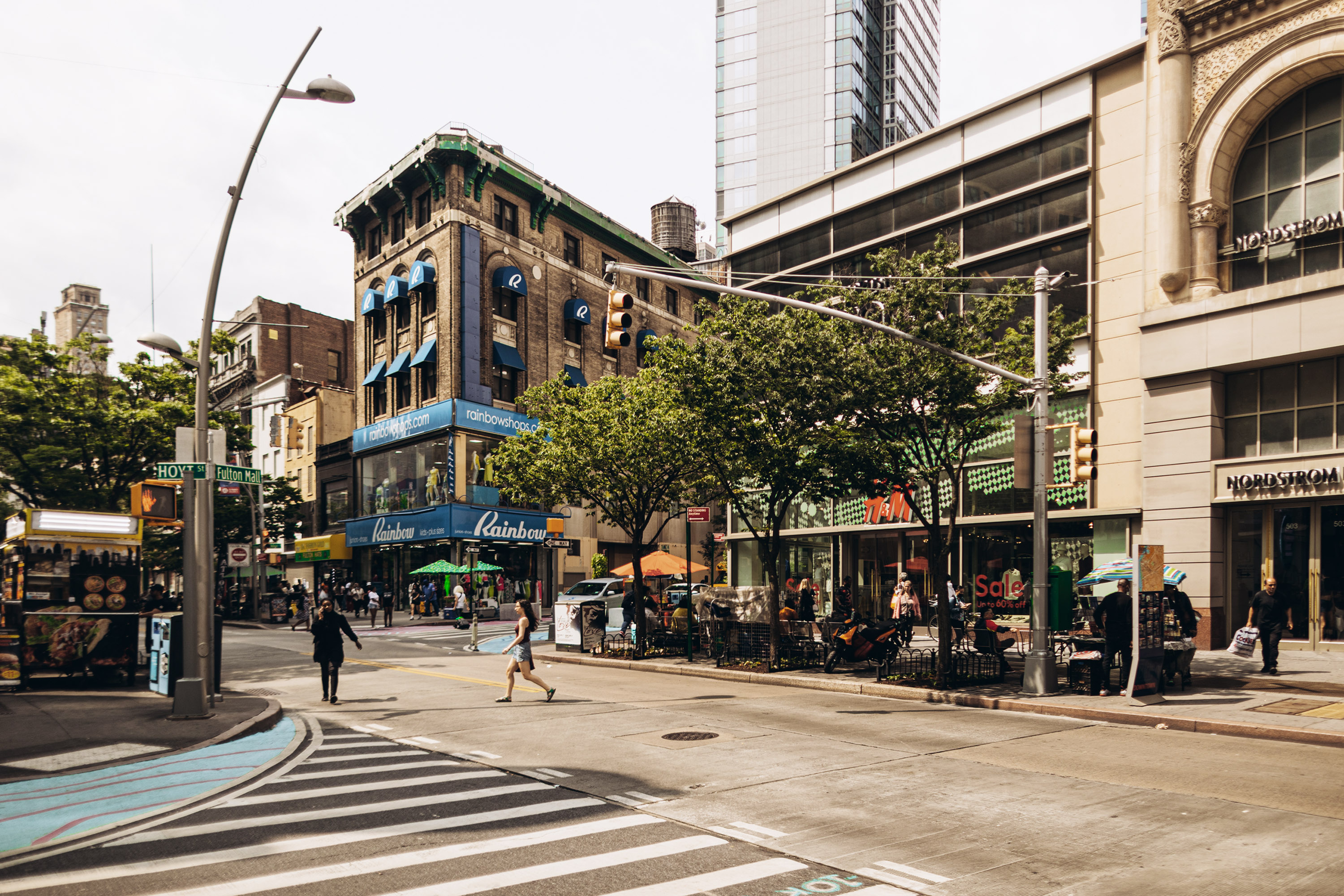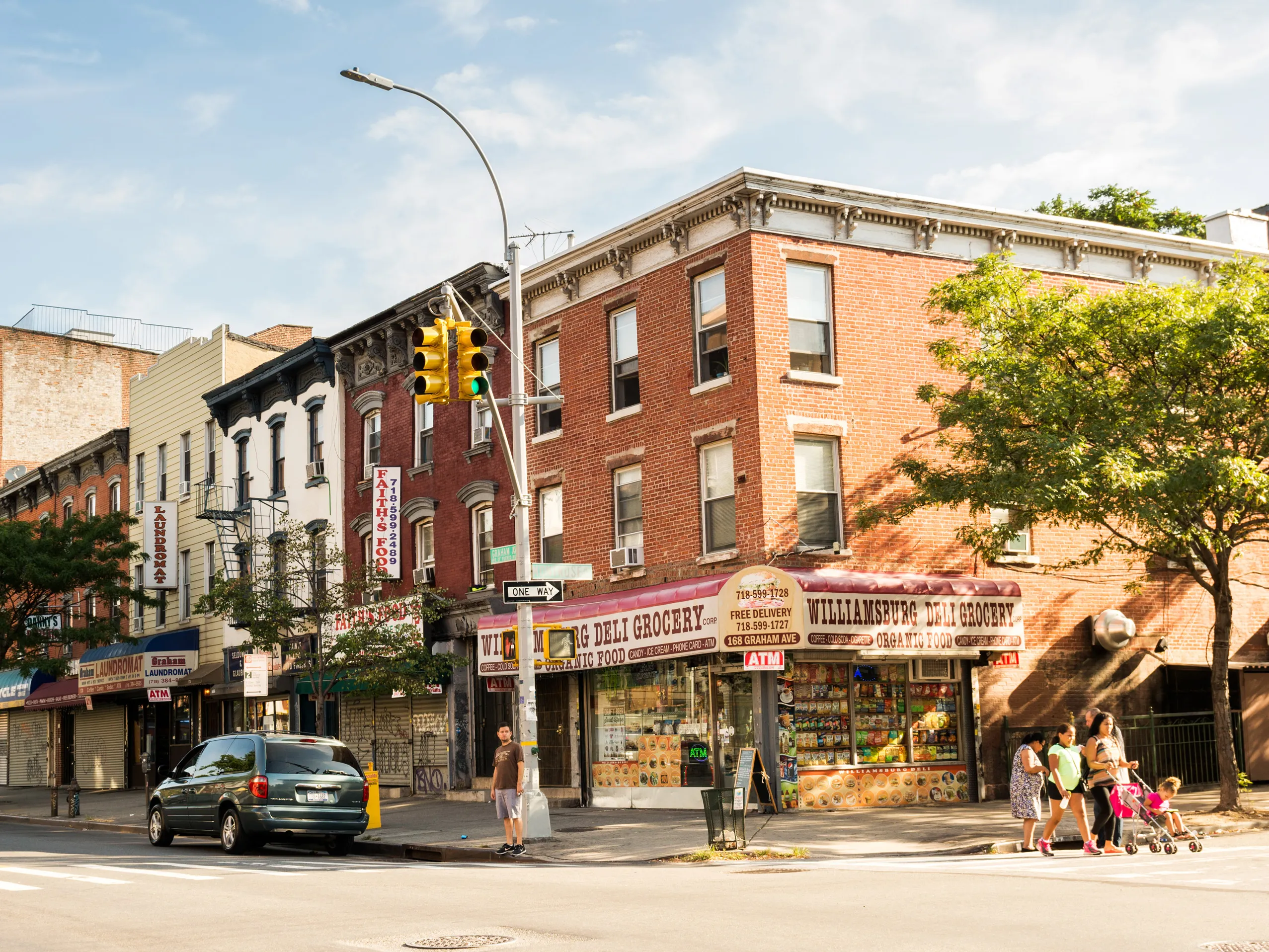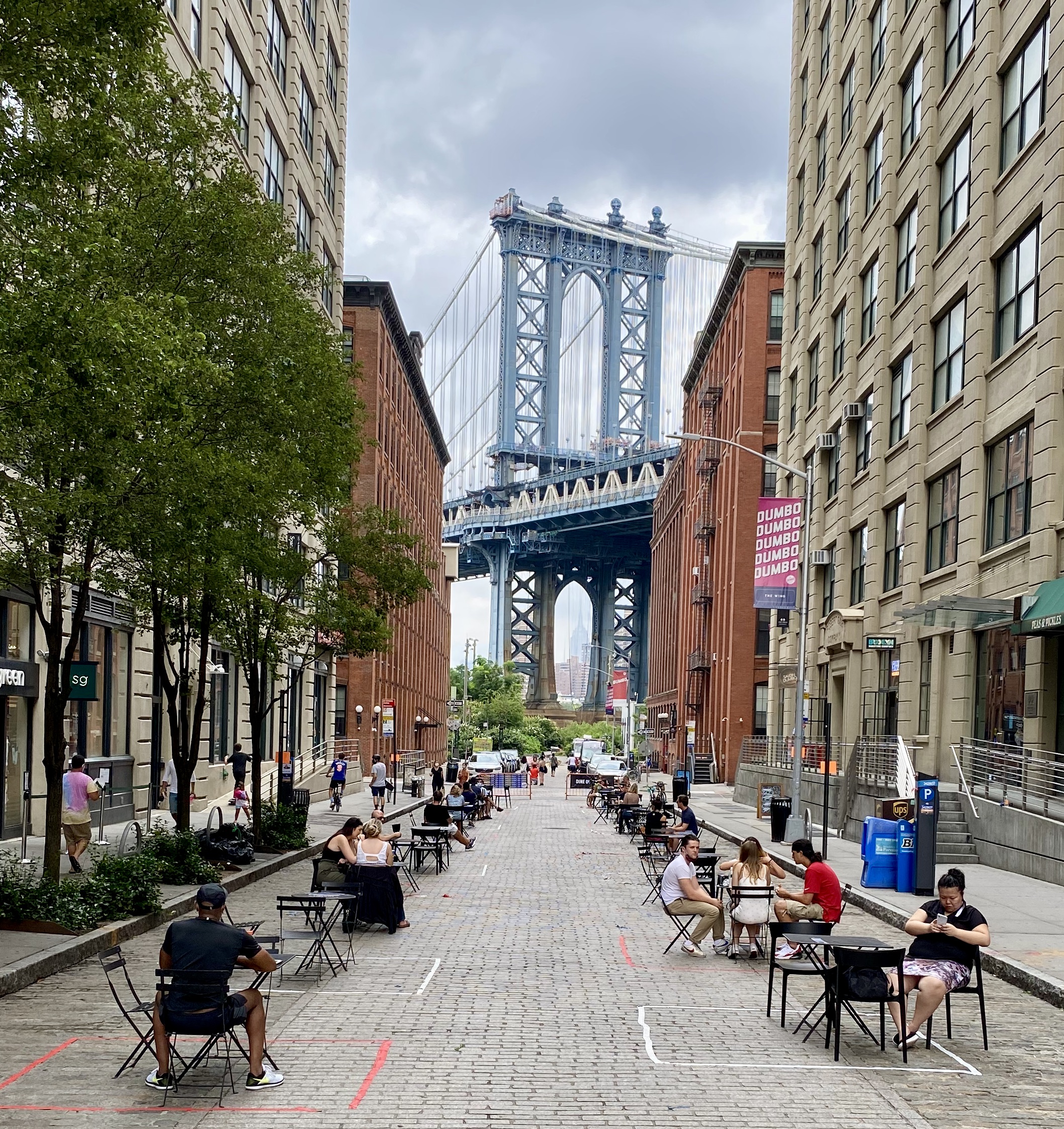
Jamaica is Queens' civic and transit anchor rather than a single real estate type: courts, Social Security offices, and York College sit within blocks of the elevated J train retail strip on Jamaica Avenue, and both sit within blocks of the AirTrain link to JFK. A 2007 downtown rezoning stacked new height limits on top of that older commercial grid, so an exchange candidate here can be a decade-old taxpayer lot or a fifteen-story tower built to the new envelope, depending on which side of the rezoning boundary it sits.
The Downtown Rezoning Split the Market Into Two Building Ages
The 2007 rezoning around Sutphin Boulevard, Archer Avenue, and 165th Street raised allowable height and density to encourage mixed-income residential towers near the transit hub, and a run of those towers has gone up since. Older one- and two-story taxpayer buildings along Jamaica Avenue and Merrick Boulevard were not required to redevelop, so many remain, often under-built relative to what the site now allows.
An owner comparing a rezoned tower to a taxpayer lot is comparing two different investments: one is a stabilized income property, the other is closer to a land play with a marginal existing rent roll layered on top. Both can work as replacement property, but the underwriting questions are not the same.
JFK Proximity Drives Logistics and Hotel Demand, Not Office
Jamaica's location a few minutes from JFK by AirTrain supports air-cargo warehousing, parking facilities, and limited-service hotels serving airport traffic, and that demand has been steady regardless of what downtown Jamaica itself is doing. It is a narrower category of buyer than downtown retail or the rezoned towers, and financing terms reflect airport-dependent revenue rather than neighborhood foot traffic.
South of the AirTrain corridor, Rochdale Village and the surrounding co-op-heavy blocks add another distinct category: large postwar cooperative developments that rarely trade as whole-building investment assets the way rental buildings do, since individual units are owned by shareholders rather than held under one deed.
Underwriting a Jamaica Replacement on a Tight Identification Window
Because taxpayer lots, rezoned towers, government-tenant buildings, and JFK-adjacent assets sit within the same few blocks but behave like different markets, the identification list should specify which category each candidate falls into before the 45-day window closes.
- Taxpayer retail strips along Jamaica Avenue and Merrick Boulevard, underwritten on in-place rent only
- Mixed-income residential towers built under the downtown rezoning, underwritten on stabilized occupancy
- Office space with government or institutional tenants near the courts and Social Security complex
- Limited-service hotel or parking assets tied to AirTrain and JFK traffic
- Small industrial or flex space near the Van Wyck Expressway corridor
Financing Follows the Same Line as the Rezoning
Lenders treat a stabilized, recently built tower near the AirTrain station as a standard income-property loan. A taxpayer lot bought mainly for its unused development rights is closer to a land or value-add loan, usually with a larger down payment and shorter term. An investor identifying a Jamaica property inside a 1031 window should confirm which bucket the lender puts it in well before the 180-day closing deadline, since that classification changes the loan terms enough to affect whether financing closes on schedule.
Coordinating the Advisor Record for a Jamaica Identification
A qualified intermediary can hold exchange funds and prepare the exchange documents, but the intermediary is not underwriting the deal. The investor's tax advisor should see, in writing, whether the target property is a stabilized rezoned tower, a taxpayer lot with redevelopment upside, or an airport-dependent hotel or industrial asset, since the exchange numbers and the improvement-exchange options differ across those three categories.
Common 1031 Exchange Questions
Can you use exchange funds to build out a taxpayer lot's unused density in Jamaica?
Only through a properly structured improvement exchange, where the qualified intermediary holds and disburses the construction funds and the work is substantially complete within the 180-day period. Ground-up construction on a taxpayer lot rarely finishes that fast, so most investors treat the lot as a value-add hold rather than an improvement-exchange candidate.
How do you compare a rezoned tower to an older taxpayer building for identification purposes?
Underwrite them as separate asset classes rather than as substitutes. The tower is a stabilized income property with a verifiable rent roll; the taxpayer lot's value is mostly in unused zoning capacity, and a tax advisor should confirm the numbers work under actual current income, not projected redevelopment income.
Does a government-tenant lease near the Jamaica courts complex change your diligence?
Government leases typically bring longer terms and reliable payment, but renewal timing and build-out responsibilities can differ from private commercial leases. Reviewing the actual lease terms before identification is more useful here than relying on the tenant type alone.
Is JFK-adjacent hotel or parking property treated as like-kind to an apartment building you're selling?
Since 2018, essentially any real property held for investment or business use is like-kind to any other, so a hotel or parking asset can qualify. The bigger question is whether its airport-dependent income profile fits the investor's goals, which is a business decision separate from the exchange mechanics.
Should you identify more than one property type in Jamaica given how different the submarkets are?
Many investors do, often pairing a stabilized rezoned building with a backup candidate in a different category, so the exchange isn't dependent on one deal type closing inside the 45-day identification window and the 180-day deadline that follows.